

Thanks to Eryney Marrogi for feedback on a draft of this post.
Lately there has been a lot of chatter around AI x bio / medicine. Dario claims that AI will make it “possible to cure most human disease in ~5-10 years”. In the same post he says:
at this point, saying that AI will cure cancer is more a cliche than it is inspiring, and most people think it is deceptive. The thing that will work is *actually curing cancer*.
This is a nice sentiment but if Claude spat out a molecule or antibody design tomorrow that was an effective treatment for (one type of) cancer, anyone not in the clinical trials isn’t getting it for something like 5 years minimum1. For reference, the Moderna mRNA cancer trial that just reported positive interim results (as in its not done yet) started in 2023. To Dario’s credit he acknowledges the regulatory bottleneck, but kinda skips over the biological one.
To get a new medicine to market first you have to give it to healthy people and see if they get sick or die (aka a Phase 1 trial). If that all looks good you give it to some sick people and see if they get better (Phase 2). Then you give it to a bigger group of sick people and make sure the people who got better in phase 2 weren't a fluke (Phase 3). Obviously this is massively oversimplified, and especially in cancer if the drugs are toxic phase 1 will be on sick patients, but the broad strokes stand.
Phase 2 and 3 trials in cancer most often look like “are the patients still alive without the tumor progressing in 1 or 3 or 5 years”. For cancer there is fundamentally a pretty long waiting time to see if the treatment worked. Even if we imagine that a super persuasive Mythos 2 is able to convince the FDA to completely revolutionise the way clinical trials are run to optimize efficiency, you still just won't be able to tell if a new cancer drug is actually working for a while.2 If the plan is cancer prevention vaccines then go ahead and 10x those testing timelines. Given the speed that everything else in AI is moving at, this seems like a non-starter as the PR tactic Dario is after.3
So if Anthropic (or any frontier lab for that matter) wants to get ahead of the data centre protests by showing off the amazing value that AI can deliver in medicine, they’ll want to go after something that can help you or your loved ones a little quicker.
Antimicrobial Resistant Bacterial Infections
Very simply, the problem with bacteria is that in an infection there are a lot of them, and they grow very quickly. This means that if you have a drug that kills bacteria, and there is a path for the bacteria to escape the lethality by a random mutation, that’s going to show up and take over the population very quickly. Hence, the problem of antimicrobial resistant (AMR) bacteria.
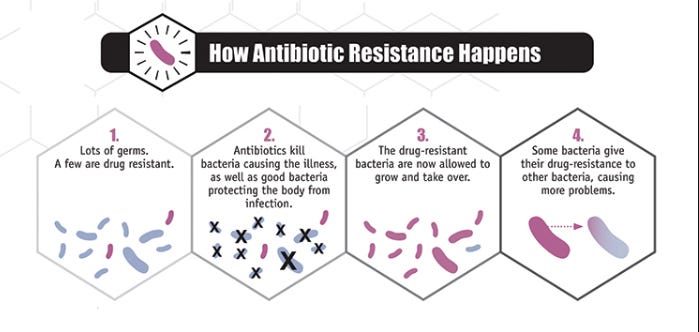
The typical AMR bacterial fatality in a first world country is usually someone older, going into hospital for another reason (hip replacement, maybe some routine minor surgery). At some point during the hospital stay they pick up an infection. Post surgery they spike a fever. They’ll get given broad spectrum antibiotics, while the lab runs a culture. In a few days culture results come back showing a resistant strain (maybe one of the superbugs like MRSA), and meanwhile the patient has continued to deteriorate. Doctors may try some other second-line antibiotics with more toxic side effects. If the infection doesn’t respond to these then progression is to multi-organ failure over the next week or so. The timeline from first fever to death is something like 1 - 3 weeks.
I will not go deep into numbers and graphs here, that info is all out there, but the death toll for AMR infections is a really significant health burden. We’re talking on the order of 5 million deaths per year (depending on how you count).
Pharma is by and large not spending money on developing new antibiotics. This is a completely rational move by them, since the economics of antibiotic development are really brutal. There is a graveyard of failed attempts and bankrupt companies over the last several years. A big part of this is that any drug with a new mechanism of action that works on resistant strains is going to have use heavily restricted and rationed out to only cases that really need it. The goal will be to use it as little as we can to starve of resistance as long as possible - this is not generally considered blockbuster territory.4
There are proposals for prizes and subscription models to counteract this, and there are subscription models already running in a few countries (the subscription model is that a hospital pays a set price every year for access to the antibiotic, regardless of how much they use it), but this hasn’t been enough to lead to an influx of research investment from the industry side.5
AMR bacteria is a pretty good target as long as you don’t actually care about making money selling drugs
Resistant bacteria have a bunch of features that make them a pretty good target for research. The reasons we see very little commercial development activity are much more financial than technical. For a frontier lab (or the associated non-profit) looking to show off the real world impact of AI rather than sell a blockbuster drug, with tokens to burn and an LLM smart enough to crawl through the literature to evaluate ideas and form hypotheses, it’s actually one of the best real world medical problems for AI to tackle.

First of all, academia has kept up the pre-clinical discovery research and investigation of bacterial resistance mechanisms, even as pharma has abandoned the investment in these programs. There are also programs for gene sequencing and tracking resistant strains. Because of this we have a pretty good understanding of the mechanisms of bacterial resistance - in some cases insanely good: here you can go have a look at how bacterial efflux pumps interact with antibiotic erythromycin at atomic scale resolution. The only thing Fidji Simo agrees with Dario on is that cancer is a good target because we have so much data, well we have buckets of data on resistant bacteria too.
We also have plenty of ideas and pre-clinical data for new antibiotics that have stalled out at the pre-clinical level: some of these just kind of quietly didn’t go anywhere, some are owned by start-ups looking for funding that the consensus wisdom says the investors won’t earn back, some probably are in some weird licensing limbo. For example we have this one, this one, this one or this one.
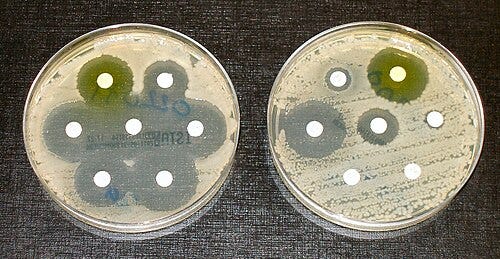
Next; the lab assays are cheap, easy and very straightforward to automate. There is no expensive kit or specialized equipment. You can do a basic version of a bacterial killing assay in your kitchen with supermarket ingredients. It’s all incredibly routine stuff and you can run thousands of tests in parallel with bread and butter lab automation.6 In a decked out cloud lab you can scale this up really hard.
Once you have a good hit and want to test it; the animal models are (compared to other diseases) pretty damn good. You do need to worry about metabolism differing between mice and humans but fundamentally you are indeed checking in a mammal if hitting the actual target works. The target is the bacteria, not the host, so it’s identical in both the mouse and the human. The readout (does the subject survive) is also identical, quick and binary. Compare this to for example something like depression where both the protein you’re going after in the brain is different, and the mouse is not actually depressed in the way a human is, so you’re looking at proxy models that may or may not actually reflect the real condition.
Finally, once you are ready to move into human trials you get your readout (survival) very quickly. There are regulatory and enrolment issues but once you start dosing people you will know in under a month if it's working (as pointed out above, these infections generally move pretty quickly).
What could a country of geniuses in a data centre do to get new antibiotics into patients?
Quite a few things.
Option 1 would be to just do some proper drug discovery. You could have agents crawl through the literature, come up with a plan and then just try to come up with some novel molecules. Set something up similar to the recent Anthropic protein design study and have the LLM call and coordinate ML models to find new compounds with access to a cloud lab(s) for synthesis and screening. See if you can learn something from ingesting the masses of papers published in this field, pick a target and run the optimal experiments. This isn’t a new field, people have been using ML for antibiotics drug discovery already.7 But, hey, people were trying to crack Erdős's unit distance conjecture without LLMs too. If the promise is we will cure all diseases, drug discovery in a good target with a fast and cheap lab model should be a gimme.
Option 2 is that you go have Claude or a GPT through the literature and try to hunt down the most promising compounds already discovered, buy them, and try to get them through to approval. Let the LLM figure out what to offer, who to contact, how to close the deal. Less exciting but if you're willing to eat some cost and leverage AI to speed things up and make better calls about the best candidates then a completely valid route.
Option 3 is the quickest route to patients, and maybe the most well suited to LLMs, but requires a little more explanation.
Here you’d look at repurposing existing approved drugs, not as antibiotics themselves but as adjuncts. Adjuncts are things with little to no bacteria killing activity, but that make existing antibiotics more effective.
The canonical example of an antibiotic adjunct is clavulanic acid. This is a compound that does nothing to kill bacteria on its own, but inhibits beta-lactamase, the enzyme that bacteria make to break down penicillins. Beta-lactamase inhibition can effectively flip some fully penicillin resistant strains to fully susceptible, and this combo is still widely prescribed today.
The idea with drug repurposing is that you try to find something already approved for some other indication, and see if it increases the activity of antibiotics on resistant bacterial strains. This is less of a random crapshoot than you might think, with the overlap between molecules that “do something of relevance to bacteria” and “do something pharmacologically to humans” being much larger than random chance. The first ever antidepressant was an anti-tuberculosis drug that they noticed people became less depressed on, since it both kills TB and inhibits the enzyme that breaks down (among other things) serotonin.
There have been scattered reports of approved drugs synergising antibiotics throughout the literature for years. There have also been some attempts at systematically screening libraries of drugs in combination with antibiotics to look for synergies against specific strains. Among the things that seem to have some effect in vitro are cancer drugs, ovulation stimulating drugs, antipsychotics, statins, anti-retrovirals and many more.
Very few of these hits could ever translate to use in the clinic because of dosing issues and side effects. One would never be able to test everything in animal models, let alone humans.
To find the best candidates you’d have to dig into the paper where the result was first published and think about the methodology, then do a literature review to see what else is out there. You’d want to look through disparate sources for potential interactions in metabolism between your proposed antibiotic and adjunct. You’d want to figure out where the information on the range of plasma concentrations in normal use is, track it down, see if that matches what was tested in the lab. You’d want to decide if it’s worth the risk of going over the normal dosing based on the side effect profile and any other sources of toxicity data in humans or animals. You’d want to also check how the drug is partitioned: does it hit higher concentrations in particular tissues? Are those the tissues where the infection is? You’d need to pull all this information from different sources, reason about it, synthesise it together somehow. (I am describing here basically the perfect problem to throw an LLM with a bunch of subagents at.)
Combine this with some cloud lab access where the model can do things like validate published results, run more detailed concentration response experiments or even target the most significant holes in our Approved drug x Strain x Adjunct data and you have a real pipeline to look for promising hits.
Now it’s true that even more so than discovering a new antibiotic that gets rationed out, one shouldn’t expect to see any specific returns from a program like this. Discovering that an antidepressant that has been off patent for 3 decades makes MRSA sensitive to amoxicillin doesn’t pay. The return is all in the PR and, you know, public benefit.
What about the clinical trials?
Clinical trials are basically massive logistical problems that require coordinating a bunch of groups and people. For AMR trials, the challenge is in catching the infection quick enough that you can get consent from the patient and start treatment. For a decent sized trial this probably means dealing with a bunch of different sites to get enough participants.
Again we have exactly the kind of problem that LLMs are suited to. Have the model crawl through all the incidence data it can and pick the best sites. Set up an automated system to predict likely cases and flag them early. Interface automatically with the pathology labs.
If you have objections about data security, HIPAA etc. then I agree this will be annoying and painful to work around, but if frontier intelligence too I-Work-At-Anthropic to meter cannot help lubricate this process then curing most human disease in 5 years is a bit of a non-starter anyway.
For the repurposing option you can actually skip a bunch of steps, but the status of what a doctor can legally prescribe off label (anything approved) vs what is actually going to happen given different levels of evidence and which regulatory bodies have a say is messy and confusing. I spent some time trying to understand it and got frustrated then realised giving up actually helps my case: another messy fuzzy problem of overlapping regulations that an LLM should absolutely be able to help navigate.
To be clear, I’m not making a strong claim that AI will definitely find something amazing with this approved repurposing approach, or any of the options I’ve thrown out there. This could be a total dead end fundamentally and require a massive big pharma discovery program. I’m saying that if there is something there to be found on any of these approaches, and I think the odds are pretty good given what data we do have, finding it and pushing it through to the clinic is a very LLM shaped problem. The timeline to saving lives is way quicker than cancer, and it's a problem that lately been largely deemed too expensive given the expected returns. AMR bacteria is a great indication for one of the big labs to throw some of their considerable resources at for a PR / life saving W.
The fastest cancer hit to approval ever I could find was osimertinib, which was discovered in early 2012 and approved in November 2015. That approval has a big asterisk since it was an accelerated approval based on tumor response rates, was limited to a second line use in patients not responding to first line treatments, with a specific resistance mutation and came with an obligation to do confirmatory follow up trials. Full approval came in 2017 and approval as a first line drug in 2018.
There is some level of efficacy where this goes away. If the ASI can build cancer targeting nano-bots that go and kill every cancerous cell in your body so that the tumor unambiguously disappears from a scan then sure, we can design something that will be undeniable, and at that point I think it kind of doesn’t matter what the regulations say. Under anything within the realm of a normal drug development scenario though these trials are going to take time.
I am picking on what I think is actually a pretty good sentiment and attitude from Dario here to make a point.
AMR hasn’t been a big focus of EA discourse, in part because there is very little in the way of legible tractability. The discussion is mostly around stewardship and advocacy, as well as the financial engineering ideas like the subscription models to incentivize pharma to actually develop these drugs.
For my first paper as a postdoc I ran 8000 bacterial growth experiments testing different strains against antibiotics solo with an Opentrons OT2 and a Growth Profiler.
!